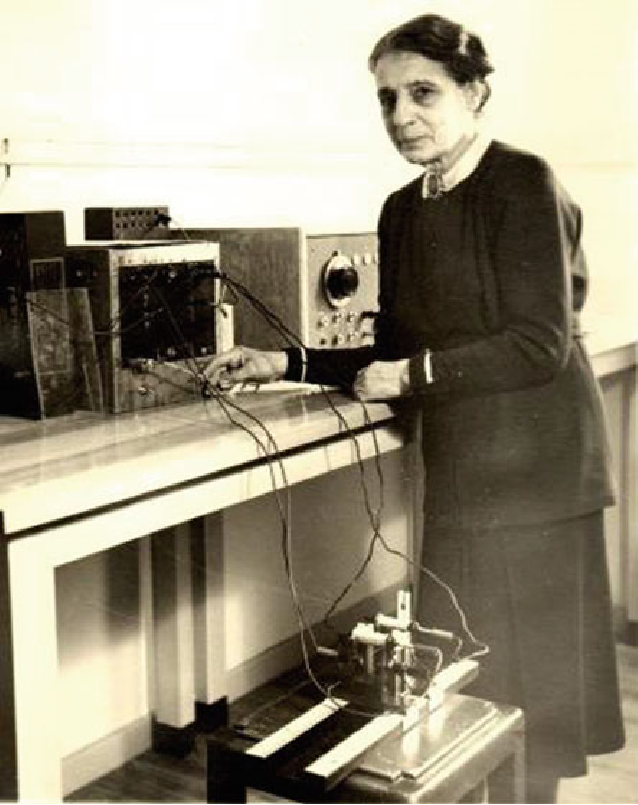


Lise grew up in a liberal Jewish family in Vienna. Her father supported her education. This was unusual. Most families did not educate daughters beyond basic schooling. Lise kept a notebook under her pillow. She recorded observations about natural phenomena. She wanted to understand how things worked.
Women could not attend gymnasium in Austria. Lise finished school at 14. She was expected to become a teacher. She studied French. In 1897, the rules changed. Universities opened to women. Lise was already 20. She needed to pass the Matura exam. This required eight years of gymnasium education. She hired private tutors. She studied intensively for two years. She passed in 1901.
She enrolled at the University of Vienna. Ludwig Boltzmann taught theoretical physics. He was a pioneer of statistical mechanics. His lectures transformed how Lise thought about atoms. She earned her doctorate in 1906. Her thesis examined heat conduction in inhomogeneous materials. It was solid but not groundbreaking. She wanted to do more.
Max Planck had discovered the quantum of action in 1900. Physics was changing. Lise wanted to learn from Planck. She traveled to Berlin in 1907. Planck was initially skeptical about women in science. He met with Lise. Her knowledge impressed him. He allowed her to attend his lectures unofficially. In 1912, he made her his assistant. She became one of the few women in German physics.


