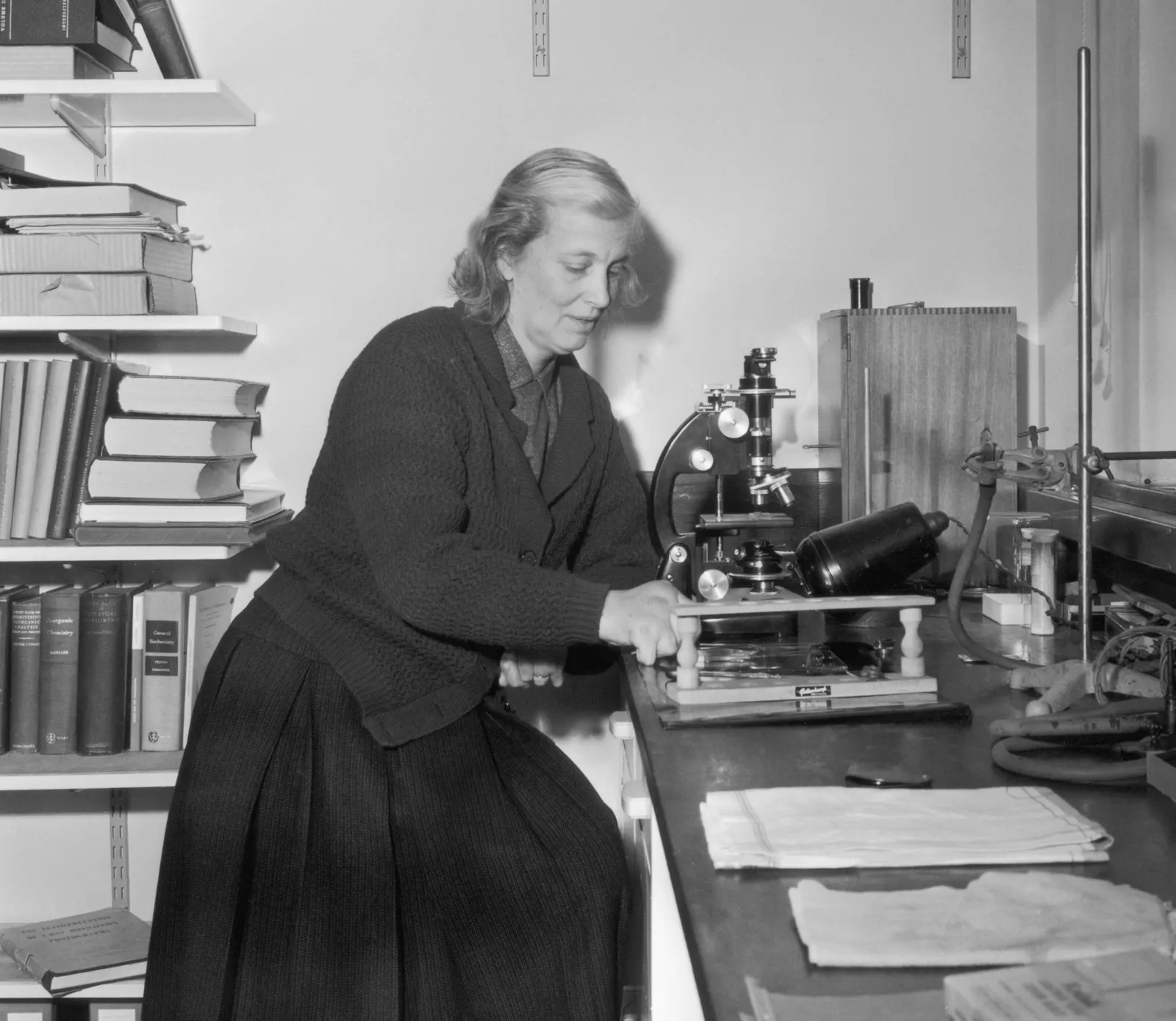


Hodgkin's parents encouraged intellectual curiosity. Her mother studied ancient textiles and Coptic embroidery. Her father excavated Byzantine churches. She grew up surrounded by artifacts and scientific inquiry. Chemistry fascinated her early. She grew copper sulfate crystals. She analyzed them under microscope. She read about X-ray crystallography at age 16.
At Oxford, women faced discrimination. Cambridge graduate programs excluded women entirely until 1947. Oxford admitted women to Somerville College but rarely hired them as faculty. Hodgkin married Thomas Hodgkin in 1937. They had three children. She worked throughout pregnancies and childcare. Rheumatoid arthritis struck in her 20s. Her hands became deformed. She developed methods for manipulating crystals despite painful joints.
She mentored many students. Margaret Thatcher studied chemistry under Hodgkin at Oxford. Thatcher called Hodgkin the person who most influenced her. Hodgkin encouraged young scientists regardless of gender. She believed science should serve humanity. She protested nuclear weapons. She promoted scientific cooperation between nations. Queen Elizabeth II awarded her Order of Merit in 1965, only second woman to receive this honor.


