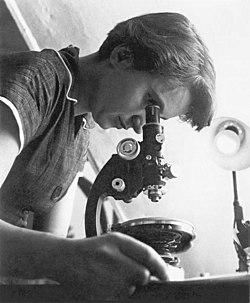


Franklin grew up in a family that valued education and public service. Her father taught evening classes to working men. Her aunts fought for women's suffrage. The family sheltered Jewish refugees. This environment shaped Franklin's sense of justice. She believed in using science to benefit humanity. She also believed women deserved equal opportunities in science.
At Cambridge, she clashed with her thesis supervisor who dismissed her findings and disapproved of women scientists. But the war created new opportunities. Labor shortages opened positions for women in research and industry. Franklin joined the British Coal Utilisation Research Association in 1942. She studied how coal structure affects its properties. This work was important for the war effort. It also let her work independently without hostile supervision.
Franklin published five papers on coal structure between 1946 and 1950. She earned her PhD in 1945. Her coal work established her as an expert in material structure using physical chemistry methods. When she went to Paris in 1947, she brought this expertise. Jacques Mering taught her X-ray diffraction techniques. She combined this with her structural analysis skills. She became exceptionally proficient at interpreting diffraction patterns.
Franklin thrived in Paris. The laboratory had less formality than British institutions. Scientists collaborated as equals. Gender mattered less. She made lifelong friends. She learned French scientific culture. She published papers on carbon structures. By 1951, she was recognized as an authority on X-ray crystallography. This reputation led to the King's College offer. She expected to lead the DNA crystallography work. The confusion about her role with Wilkins created immediate tension.


